Cabin Kit vs. Modular Home: Which One Is Right for You?
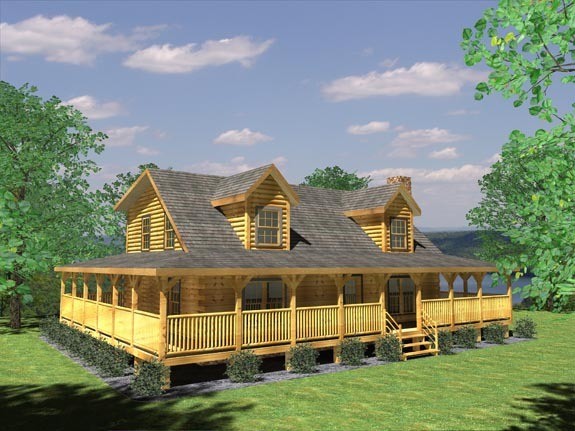
You want to put a structure on your land. You've narrowed it down to two prefab options that promise to cut cost and timeline versus custom construction: a cabin kit or a modular home. Both ship pre-built components to your site. Both are faster than stick-built. And that's roughly where the similarities end.
The differences between a log cabin kit and a modular home run deeper than aesthetics — they affect your permitting process, your financing options, how much you can participate in the build, and what the structure will feel like to live in or rent out. This guide breaks down every relevant dimension so you can make the call with real information, not sales copy.
We'll be straight about where modular wins — it does, on a few important dimensions. And we'll explain where cabin kits come out ahead, which for most rural buyers is most of the time.
Quick Comparison: Cabin Kit vs. Modular Home
| Factor | Cabin Kit | Modular Home |
|---|---|---|
| Cost (2-bed, all-in) | $75,000–$105,000 | $110,000–$180,000+ |
| Timeline to occupancy | 6–12 months | 4–9 months |
| Customization | Multiple floor plan variants + add-ons | Factory options only; site changes limited |
| Permitting | Stamped drawings included; rural-friendly | HUD or state code; varies by county |
| Financing | Personal loans, construction loans, land equity | Chattel loan, personal loan, or construction-to-perm |
| DIY factor | Shell assembly designed for DIY crews | None — factory-built, crane-set on site |
| Character & aesthetics | Real log construction, handcrafted look | Modern/conventional — limited rustic options |
| Remote / off-grid builds | Excellent — ship flat, assemble on-site | Difficult — requires crane, wide road access |
| Resale value | Comparable to stick-built in rural markets | Strong in suburban; varies in rural |
Cost: What You Actually Pay
For a 2-bedroom build on rural land, cabin kits consistently come in at the lower end of the prefab spectrum. Here's why:
Cabin Kit Cost Advantage
- Kit price covers engineered components — you buy direct, no factory-to-dealer markup
- DIY shell assembly eliminates $15,000–$30,000+ in contractor labor for the framing phase
- Stamped engineering drawings ship with every kit — no architect fees ($3,000–$15,000 saved)
- No factory overhead embedded in the price — modular facilities are expensive to run
A Fireside 2-bedroom kit starts at $38,500 for the kit itself. All-in with foundation, interior finishing, and utilities, most buyers land between $75,000 and $105,000 depending on how much labor they do themselves.
Modular homes for similar square footage typically start at $80,000–$120,000 for the modular unit alone — before foundation, delivery, crane-setting, utility hookup, and site work. All-in costs of $110,000–$180,000 for a 2-bedroom are common.
Where Modular Can Compete on Cost
If you plan to hire out all labor on a cabin kit build (no DIY), the cost gap narrows. Modular homes are priced as turnkey structures — you're paying for factory labor, which is often more efficient than hired field crews for basic framing. If hands-off construction is your priority, modular's labor cost is already baked in.
See cabin kit prices for yourself
Studio Shack at $12,500 to 5-Bedroom at $179,000 — full specs and pricing on every kit.
Browse All Cabin KitsTimeline: Where Modular Has a Real Edge
This is the dimension where modular homes win clearly — and we'll give them credit for it.
A modular home is manufactured in a climate-controlled factory and can be crane-set on a prepared foundation in a single day. The factory-to-site timeline is typically 8–14 weeks once the order is placed. With a pre-approved foundation and utilities ready, some modular homes are occupancy-ready in 4–6 months total.
Cabin kits take longer — typically 6–12 months from order to move-in. Most of that time is permitting review, foundation prep, and interior finishing — not the shell assembly itself, which runs 2–3 weeks. But if your top priority is the fastest possible path to a livable structure, modular is the better choice.
The nuance: if you're building on remote land with limited road access or site constraints, modular delivery becomes logistically complex — wide-load trucks and cranes need room to operate. Cabin kits ship flat on standard flatbeds and can reach much more remote sites without infrastructure issues.
Customization: Beyond the Floor Plan
Modular homes offer customization — within factory constraints. You can typically choose floor plan variants, exterior finishes, cabinetry, flooring, and fixture packages. What you can't do is fundamentally change the structural system, deviate from standard room geometries, or add structures that weren't in the original factory spec.
Cabin kits give you multiple floor plan variants per model, genuine add-on flexibility (Bunkhouse, Bathhouse, Sauna, Smoke Shack), and complete control over interior finishes because the kit delivers the shell and you choose everything inside. The add-on ecosystem is especially valuable for property investors who want to build out a multi-structure rental compound over time — each structure engineered to pair with the main cabin.
Want a porch on one side and a deck on the other, added two years after the initial build? That's a kit add-on. With a modular home, structural modifications post-delivery get complicated quickly.
For a full view of what our assembly and add-on system looks like, visit the How It's Made page.
Permitting: Rural Reality Check
Permitting is where many buyers get surprised — and it matters more than most people realize at the planning stage.
Cabin Kit Permitting
Fireside kits ship with stamped engineering drawings pre-approved for most standard county permit reviews. The structure is classified as a conventionally-permitted building — the same permit path as stick-built construction. Most rural counties can review and approve in 4–8 weeks. The permitting process for cabin kits is well-understood by rural building departments.
Modular Home Permitting
Modular homes are built to either HUD code (manufactured homes) or state building code (true modular). True modular homes generally permit like site-built structures in most states. However, some rural counties have limited experience with modular construction and may require additional review, inspections, or documentation beyond what the factory provides. Financing lenders also care about this distinction — HUD-code manufactured homes on non-permanent foundations can restrict future financing options.
Always confirm classification with your county before ordering either option. The terms "modular", "manufactured", and "prefab" are used inconsistently in the industry.
Financing: More Paths for Cabin Kits
Both options can be financed — but cabin kits have access to a wider range of loan products because they're classified as conventional construction from the moment you break ground.
- Personal improvement loans (LightStream, SoFi) — no collateral, fast approval, fixed rates. Works well for smaller kits.
- Construction-to-permanent loans (BuildBuyRefi) — up to $3M+, finances land + kit + labor in one close. Best for full-property builds.
- Land equity loans — if you own land, borrow against it to fund the build.
Modular homes — particularly HUD-code manufactured homes — are often limited to chattel loans (personal property financing), which carry higher rates and shorter terms than conventional mortgages. True modular homes on permanent foundations can qualify for conventional financing, but the process is more complex in rural markets where lenders have limited comparables.
Our financing page covers both lenders we work with in detail.
DIY Factor: The Cabin Kit Advantage Most People Underestimate
Modular homes arrive assembled. There's no shell to build — the factory handles everything, and a crane sets it on your foundation. That's the point. But it also means you have zero involvement in the construction, and you pay for every hour of factory labor whether you wanted to or not.
With a cabin kit, the shell assembly is genuinely DIY-accessible. Buyers with basic mechanical aptitude and 4–6 helpers can assemble a 2-bedroom shell in 2–3 weekends. The savings are real: $15,000–$30,000 in framing labor that stays in your pocket. Plus, there's something meaningful about knowing you built it yourself.
If you want a hands-on project, modular isn't the answer. If you want maximum convenience and minimal personal time invested, modular earns its premium.
Resale Value: What Buyers and Appraisers Care About
This depends heavily on market and classification. In rural markets — the primary context for cabin kit builds — log cabin structures typically appraise and sell well because buyers in those markets are specifically looking for character, authenticity, and permanence.
True modular homes on permanent foundations generally appraise comparably to stick-built in most markets. HUD-code manufactured homes — which some buyers conflate with "modular" — carry a persistent stigma and resale discount in many markets, especially on leased or non-permanent foundations.
The takeaway: if you're building a cabin kit with a permitted foundation and finished interior, resale value is strong. If you're buying a modular home, confirm it's titled as real property (not personal property) and built to state building code — not HUD code. That distinction is what lenders and appraisers look at.
Who Should Choose a Cabin Kit
- Buyers who want to save $30,000–$50,000 by participating in the build themselves
- Anyone building on remote land with limited road access — kits ship flat and reach places cranes can't
- Hunters, anglers, and outdoor enthusiasts who want a structure with character, not cookie-cutter construction
- Airbnb and short-term rental investors who need a distinctive property that photographs well and commands premium rates
- Homesteaders who want to build incrementally — main cabin first, add Bunkhouse or Sauna later
- Buyers who care about long-term flexibility — structural add-ons, future expansion, phased financing
Who Should Choose a Modular Home
- Buyers who want the fastest possible path to occupancy and don't care about DIY involvement
- Projects on accessible land where crane delivery is logistically simple
- Buyers who want a move-in ready structure with appliances, fixtures, and finishes already installed
- Projects where the aesthetic goal is a modern or conventional home, not a rustic cabin
Modular is a legitimate choice for the right buyer. It's just not the right choice for most people reading this — because the people drawn to cabin kits typically value cost control, DIY involvement, rustic character, and rural flexibility. Those are precisely where cabin kits win.
The Bottom Line
If your priority is the fastest possible path to a move-in ready structure and you're not interested in hands-on involvement, modular is worth your time. It earns its premium on speed and convenience.
If your priority is cost, character, remote-land accessibility, DIY satisfaction, or long-term flexibility — a cabin kit delivers more for less. For most rural buyers in 2026, that's the better path.
Still working through which kit size fits your land and budget? Review financing options first so you can compare floor plans and prices against a real payment path. Or browse all kits directly.
Ready to compare your options?
Review financing options to pressure-test the budget, or browse the full lineup.