Cabin Kit vs. Stick-Built: Which Is Right for You?
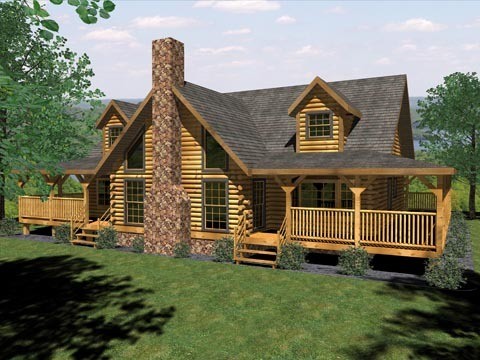
If you're planning to build on raw land, you'll face this question early: should you buy a cabin kit, or hire a contractor to build from scratch? Both approaches can produce a beautiful, durable cabin — but they're very different experiences in terms of cost, speed, effort, and flexibility.
This guide gives you an honest, side-by-side look at cabin kits versus stick-built construction across five key dimensions. No spin — just the facts so you can make the right call for your project.
1. Cost
Cabin kits are generally 25–40% less expensive than equivalent stick-built construction. Why? Kit components are milled in a controlled environment and pre-cut to spec, eliminating job-site waste and reducing labor hours significantly.
| Size | Cabin Kit (all-in) | Stick-Built (estimate) |
|---|---|---|
| ~400 sq ft (studio) | $35,000–$55,000 | $55,000–$90,000 |
| ~900 sq ft (2-bed) | $75,000–$105,000 | $130,000–$180,000 |
| ~1,300 sq ft (3-bed) | $130,000–$175,000 | $200,000–$270,000 |
Stick-built cost advantage: more granular control over which finishes you spend on. But the base construction cost is simply higher, and you're at the mercy of contractor scheduling and change orders.
Winner: Cabin kit — unless you have a very specific design that requires extensive custom framing.
2. Timeline
Kit builds move fast once the foundation is set. An experienced crew can have a 2-bedroom cabin fully weathered-in (roof on, doors and windows set) in 2–3 weeks. A comparable stick-built project runs 3–6 months for the same phase.
Total project timeline from permit application to occupancy:
- Cabin kit (2-bedroom): 6–12 months — mostly permitting and finishing time
- Stick-built (2-bedroom): 12–24 months — scheduling, custom framing, contractor coordination
Winner: Cabin kit — significantly faster from order to occupancy.
Wondering how our kits compare on price?
Browse all 21 Fireside kit styles — from a $12,500 studio shack to a complete 5-bedroom home.
Browse All Cabin Kits3. Skill Requirements & DIY-ability
This is where kits really shine. Fireside kits are engineered for DIY assembly — every log and timber is pre-cut and numbered, paired with step-by-step assembly manuals and builder support by phone and video call throughout the project. A skilled homeowner with a competent crew of 4–6 can assemble the shell without a general contractor.
Stick-built construction typically requires a licensed general contractor (GC) and subcontractors for every phase — framing, roofing, electrical, plumbing, HVAC. DIY stick-built is possible but significantly more complex because nothing arrives pre-cut or pre-engineered. You're making hundreds of cut decisions that the kit already made for you.
Winner: Cabin kit — designed for confident DIY from day one.
4. Customization
Stick-built wins here — clearly. A skilled contractor can build anything: unusual angles, vaulted great rooms, fully custom floor plans, exotic materials. There are essentially no limits if you have the budget.
Cabin kits offer structured flexibility: our kits come in 3 floor plan variants per model, and we offer optional add-ons (porches, decks, saunas, loft packages) that expand the kit without custom engineering. For most buyers — weekend retreats, family cabins, rental properties — the standard variants cover everything they need.
For large custom orders (10+ units, commercial development), we offer modified engineering. Contact us to discuss.
Winner: Stick-built — if you need a fully bespoke design.
5. Permitting
Permits are required for both approaches, but kits have a meaningful advantage: Fireside kits ship with stamped engineering drawings that satisfy most county permit requirements out of the box. You're submitting a pre-engineered structure — reviewers know exactly what they're approving.
Stick-built projects typically require architect-stamped plans, which cost $3,000–$15,000 depending on size and complexity, and take 4–12 weeks to produce. Counties may have more questions about a custom design than about a kit with existing engineering documentation.
Winner: Cabin kit — pre-stamped drawings simplify the permit process.
Pros & Cons Summary
Cabin Kit
✓ Pros
- Lower cost — 25–40% less than stick-built
- Faster build — shell up in weeks, not months
- DIY-friendly with support included
- Pre-engineered drawings simplify permits
- Predictable pricing — no surprise change orders
✗ Cons
- Limited floor plan options vs. fully custom
- You're working within a pre-designed structure
Stick-Built
✓ Pros
- Fully custom design — any floor plan
- Any materials, finishes, structural approach
- Can accommodate unusual sites and shapes
✗ Cons
- Significantly higher cost
- Longer timeline — 12–24 months typical
- Contractor dependency and scheduling risk
- Change orders can balloon budget
- Architect plans add cost and time
Recommendation Matrix: Which Approach Fits You?
The Bottom Line
For the vast majority of people building a cabin on rural land — a weekend retreat, a rental property, or a first off-grid home — a cabin kit is the smarter choice. Lower cost, faster build, DIY-friendly, and a predictable process from order to occupancy.
Stick-built construction earns its place when you need a floor plan or site accommodation that kits simply can't provide. If that's you, a good architect and GC combination will serve you well. But for most buyers reading this, a kit will get you into your cabin faster, cheaper, and with more of your own hands in the work — which is the whole point.
Sounds like a kit might be right for you?
Review financing options to compare the right Fireside kit against your land, group size, and budget.